Achievment
Achievment
Application Mockup Design
Achievment
Application Mockup Design
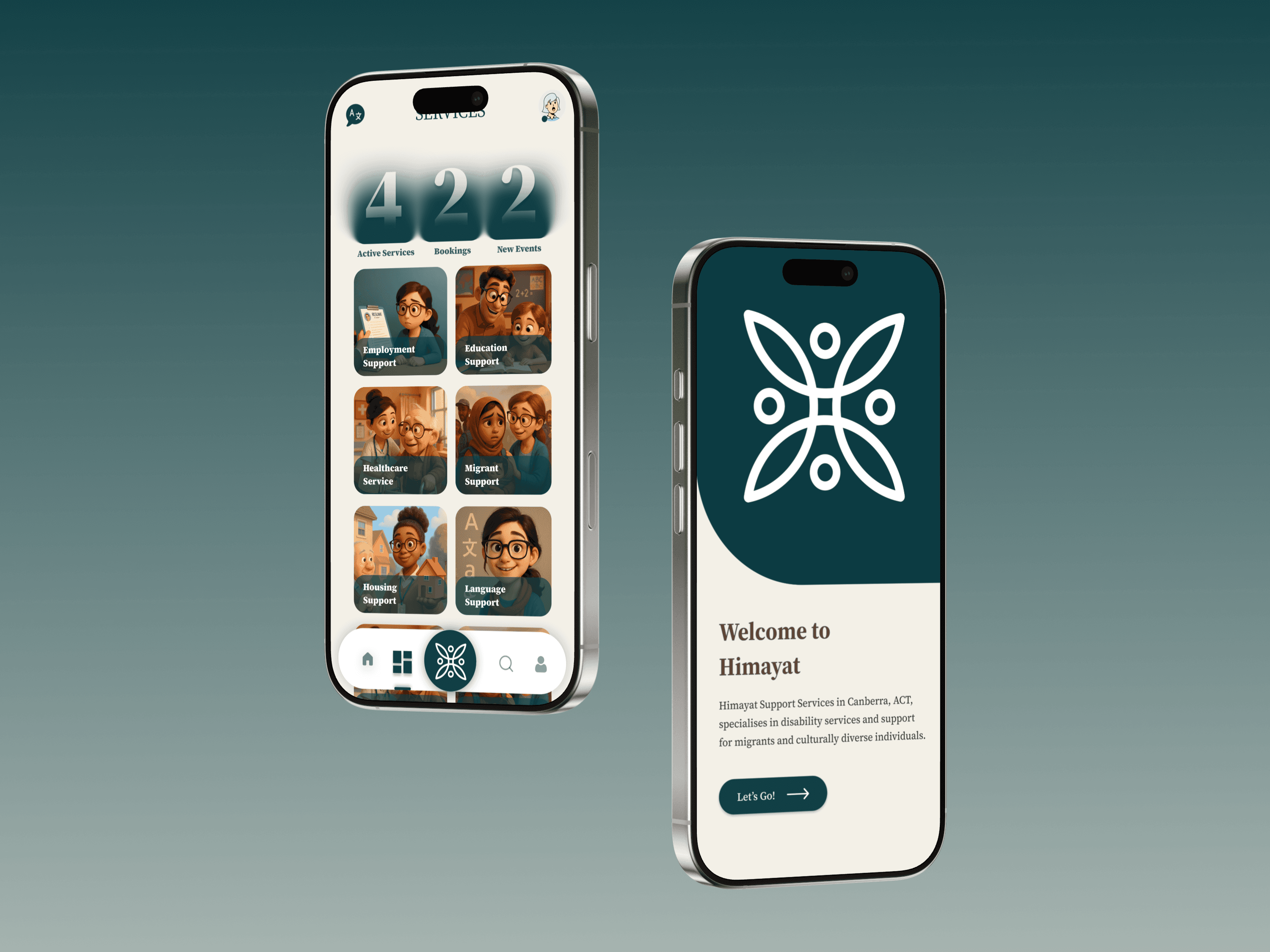
Himayat is a modern service platform designed to streamline how users access, manage, and interact with community support services. As part of enhancing the platform’s digital experience, the application mockup project focuses on creating a clean, intuitive, and user-friendly interface that reflects Himayat’s mission of empowerment and accessibility. Despite having strong service offerings and a growing user base, Himayat previously faced challenges in visually communicating its value and guiding users smoothly through key actions such as service requests, profile management, and support resources. The lack of a cohesive design system also made it difficult for new users to fully understand the platform’s capabilities. The new mockup design aims to solve these issues by introducing a polished UI, improved navigation flow, clearly structured content, and an overall experience that aligns with modern app standards. This includes interactive components, streamlined dashboards, and visual hierarchy crafted to improve clarity and engagement.
Background
In today’s digital landscape, users expect intuitive, seamless, and visually appealing applications. Whether the goal is to launch a new product or improve an existing platform, the success of any application greatly depends on its user experience and interface design. Application mockups play a critical role in bridging the gap between early ideas and the final product, ensuring that stakeholders have a clear vision of how the application will look, feel, and function.
Challenge
Many teams face challenges in translating their ideas into a concrete, user-friendly interface. Without visual guidance, miscommunication between developers, designers, and stakeholders often leads to unclear requirements, inconsistent layouts, and a final product that does not fully meet user expectations.
The core challenge is creating a design framework that accurately reflects the product’s goals, communicates functionality, and ensures usability—before development begins.
Importance of Application Mockup Design
1. Clarity and Alignment
Application mockups provide a visual blueprint that helps all stakeholders understand the application's structure, layout, and flow.
They eliminate ambiguity by showing exactly how screens will appear and interact, creating alignment among designers, developers, and decision-makers.
2. Early User Experience Validation
Mockups make it possible to test and refine user experience early in the process.
By visualizing screens and navigation paths, teams can identify issues related to usability, accessibility, and overall flow before any coding starts—saving time and cost.
3. Efficient Communication
A well-crafted mockup acts as a communication bridge between creative and technical teams.
Developers receive clear visual instructions, while stakeholders can confidently approve designs knowing what the final product will resemble.
4. Stronger Brand Presentation
Mockup design incorporates colors, typography, and branding elements, ensuring consistency across the application.
This helps strengthen brand identity, improves aesthetic appeal, and creates a professional and polished impression.
5. Reduced Development Errors and Costs
By addressing design and functionality issues upfront, mockups significantly reduce revisions during development.
This leads to faster production timelines, fewer misunderstandings, and minimized rework—ultimately lowering project costs.
6. Showcasing Features for Investors or Clients
High-fidelity mockups are invaluable when pitching to investors, presenting ideas to clients, or securing stakeholder approval.
They help visualise the product’s future potential, making presentations more compelling and easier to understand.
Results of Using Effective Application Mockups
Teams that rely on well-structured mockup designs typically experience:
Faster development cycles due to clearer requirements
Improved user satisfaction from refined UX
Higher stakeholder confidence and smoother approvals
Stronger brand consistency across the product
Reduced design-related revisions during development
Conclusion
Application mockup design is not just a design task—it is a strategic step that profoundly impacts the success of the entire project.
By visualising the application early, teams can align expectations, validate user experience, avoid costly errors, and create a product that is functional, beautiful, and user-centric.
Background
In today’s digital landscape, users expect intuitive, seamless, and visually appealing applications. Whether the goal is to launch a new product or improve an existing platform, the success of any application greatly depends on its user experience and interface design. Application mockups play a critical role in bridging the gap between early ideas and the final product, ensuring that stakeholders have a clear vision of how the application will look, feel, and function.
Challenge
Many teams face challenges in translating their ideas into a concrete, user-friendly interface. Without visual guidance, miscommunication between developers, designers, and stakeholders often leads to unclear requirements, inconsistent layouts, and a final product that does not fully meet user expectations.
The core challenge is creating a design framework that accurately reflects the product’s goals, communicates functionality, and ensures usability—before development begins.
Importance of Application Mockup Design
1. Clarity and Alignment
Application mockups provide a visual blueprint that helps all stakeholders understand the application's structure, layout, and flow.
They eliminate ambiguity by showing exactly how screens will appear and interact, creating alignment among designers, developers, and decision-makers.
2. Early User Experience Validation
Mockups make it possible to test and refine user experience early in the process.
By visualizing screens and navigation paths, teams can identify issues related to usability, accessibility, and overall flow before any coding starts—saving time and cost.
3. Efficient Communication
A well-crafted mockup acts as a communication bridge between creative and technical teams.
Developers receive clear visual instructions, while stakeholders can confidently approve designs knowing what the final product will resemble.
4. Stronger Brand Presentation
Mockup design incorporates colors, typography, and branding elements, ensuring consistency across the application.
This helps strengthen brand identity, improves aesthetic appeal, and creates a professional and polished impression.
5. Reduced Development Errors and Costs
By addressing design and functionality issues upfront, mockups significantly reduce revisions during development.
This leads to faster production timelines, fewer misunderstandings, and minimized rework—ultimately lowering project costs.
6. Showcasing Features for Investors or Clients
High-fidelity mockups are invaluable when pitching to investors, presenting ideas to clients, or securing stakeholder approval.
They help visualise the product’s future potential, making presentations more compelling and easier to understand.
Results of Using Effective Application Mockups
Teams that rely on well-structured mockup designs typically experience:
Faster development cycles due to clearer requirements
Improved user satisfaction from refined UX
Higher stakeholder confidence and smoother approvals
Stronger brand consistency across the product
Reduced design-related revisions during development
Conclusion
Application mockup design is not just a design task—it is a strategic step that profoundly impacts the success of the entire project.
By visualising the application early, teams can align expectations, validate user experience, avoid costly errors, and create a product that is functional, beautiful, and user-centric.
Himayat is a modern service platform designed to streamline how users access, manage, and interact with community support services. As part of enhancing the platform’s digital experience, the application mockup project focuses on creating a clean, intuitive, and user-friendly interface that reflects Himayat’s mission of empowerment and accessibility. Despite having strong service offerings and a growing user base, Himayat previously faced challenges in visually communicating its value and guiding users smoothly through key actions such as service requests, profile management, and support resources. The lack of a cohesive design system also made it difficult for new users to fully understand the platform’s capabilities. The new mockup design aims to solve these issues by introducing a polished UI, improved navigation flow, clearly structured content, and an overall experience that aligns with modern app standards. This includes interactive components, streamlined dashboards, and visual hierarchy crafted to improve clarity and engagement.
Background
In today’s digital landscape, users expect intuitive, seamless, and visually appealing applications. Whether the goal is to launch a new product or improve an existing platform, the success of any application greatly depends on its user experience and interface design. Application mockups play a critical role in bridging the gap between early ideas and the final product, ensuring that stakeholders have a clear vision of how the application will look, feel, and function.
Challenge
Many teams face challenges in translating their ideas into a concrete, user-friendly interface. Without visual guidance, miscommunication between developers, designers, and stakeholders often leads to unclear requirements, inconsistent layouts, and a final product that does not fully meet user expectations.
The core challenge is creating a design framework that accurately reflects the product’s goals, communicates functionality, and ensures usability—before development begins.
Importance of Application Mockup Design
1. Clarity and Alignment
Application mockups provide a visual blueprint that helps all stakeholders understand the application's structure, layout, and flow.
They eliminate ambiguity by showing exactly how screens will appear and interact, creating alignment among designers, developers, and decision-makers.
2. Early User Experience Validation
Mockups make it possible to test and refine user experience early in the process.
By visualizing screens and navigation paths, teams can identify issues related to usability, accessibility, and overall flow before any coding starts—saving time and cost.
3. Efficient Communication
A well-crafted mockup acts as a communication bridge between creative and technical teams.
Developers receive clear visual instructions, while stakeholders can confidently approve designs knowing what the final product will resemble.
4. Stronger Brand Presentation
Mockup design incorporates colors, typography, and branding elements, ensuring consistency across the application.
This helps strengthen brand identity, improves aesthetic appeal, and creates a professional and polished impression.
5. Reduced Development Errors and Costs
By addressing design and functionality issues upfront, mockups significantly reduce revisions during development.
This leads to faster production timelines, fewer misunderstandings, and minimized rework—ultimately lowering project costs.
6. Showcasing Features for Investors or Clients
High-fidelity mockups are invaluable when pitching to investors, presenting ideas to clients, or securing stakeholder approval.
They help visualise the product’s future potential, making presentations more compelling and easier to understand.
Results of Using Effective Application Mockups
Teams that rely on well-structured mockup designs typically experience:
Faster development cycles due to clearer requirements
Improved user satisfaction from refined UX
Higher stakeholder confidence and smoother approvals
Stronger brand consistency across the product
Reduced design-related revisions during development
Conclusion
Application mockup design is not just a design task—it is a strategic step that profoundly impacts the success of the entire project.
By visualising the application early, teams can align expectations, validate user experience, avoid costly errors, and create a product that is functional, beautiful, and user-centric.
Other Projects
Other Case Studies
Check our other project case studies with detailed explanations
Other Projects
Other Case Studies
Check our other project case studies with detailed explanations
Other Projects
Other Case Studies
Check our other project case studies with detailed explanations